
Understanding the Plant Tissue Culture Process for Propagation

In commercial cannabis cultivation, maintaining genetic fidelity and pathogen-free stock is critical. Traditional propagation methods, such as cloning from mother plants, often introduce risks like genetic drift and pathogen transmission, including Hop Latent Viroid (HLVd). To address these challenges, the plant tissue culture process offers a controlled, sterile environment to produce clean, uniform plants at scale. This article breaks down the plant tissue culture process, explains its mechanisms, and highlights practical considerations for licensed growers aiming to optimize their operations.
The Plant Tissue Culture Process: Step-by-Step
The plant tissue culture process involves growing plant cells, tissues, or organs in a sterile, nutrient-rich medium under controlled environmental conditions. This method allows for rapid multiplication of plants from a small piece of tissue, known as an explant, while minimizing contamination and genetic variation.
Key steps in the plant tissue culture process include:
Selection of Explant:
The explant is a small piece of plant tissue, often taken from meristematic regions such as shoot tips or nodal segments. These areas have actively dividing cells and are less likely to harbor pathogens like HLVd. Selecting healthy, disease-free explants is crucial for success.
Surface Sterilization:
To prevent microbial contamination, explants undergo surface sterilization using chemical agents such as sodium hypochlorite or ethanol. This step requires precision to avoid damaging the tissue while eliminating bacteria and fungi.
Initiation on Culture Medium:
The sterilized explants are placed on a sterile culture medium containing essential nutrients, vitamins, and plant growth regulators (PGRs) like cytokinins and auxins. The balance of PGRs influences whether the explant forms shoots, roots, or callus tissue.
Multiplication Phase:
Once shoots develop, they can be subdivided and transferred to fresh medium to multiply further. This phase enables exponential propagation from a single explant, reducing the need for large mother rooms.
Rooting and Acclimatization:
Shoots are induced to form roots by adjusting hormone levels in the medium. After rooting, plantlets are gradually acclimatized to ambient conditions outside the sterile environment, preparing them for transplanting into soil or hydroponic systems.
Quality Control and Pathogen Testing:
Throughout the process, samples are tested for pathogens such as HLVd to ensure clean stock. This step is vital to prevent the spread of infections that can reduce yields and quality.

Cannabis shoots developing in sterile culture vessels during the multiplication phase.
Why the Plant Tissue Culture Process Matters for Licensed Cultivators
The plant tissue culture process offers several advantages over traditional propagation methods, especially for licensed cannabis cultivators facing challenges like HLVd contamination and genetic drift.
Pathogen Elimination:
Meristem culture, a form of tissue culture, can eliminate systemic pathogens including HLVd. This is because meristematic cells often lack the viroid, allowing for clean plant production.
Genetic Uniformity:
Unlike cloning from mother plants that may accumulate mutations over time, tissue culture produces genetically stable plants. This consistency is essential for maintaining product quality and regulatory compliance.
Space and Cost Efficiency:
Tissue culture reduces the need for large mother rooms, lowering facility costs and labor. A small number of explants can generate thousands of plants in a fraction of the space.
Rapid Multiplication:
The exponential growth potential accelerates production cycles, enabling faster scaling of new cultivars or replenishment of stock.
Preservation of Elite Genetics:
Tissue culture allows long-term storage of valuable genetics in vitro, protecting them from environmental stressors and pathogens.
What is the difference between cell and tissue culture?
Understanding the distinction between cell culture and tissue culture is important for applying the correct propagation technique.
Cell Culture:
This involves growing isolated plant cells or protoplasts (cells without cell walls) in liquid or semi-solid media. Cell culture is primarily used for genetic engineering, somatic embryogenesis, or secondary metabolite production. It requires advanced technical expertise and is less common for routine propagation.
Tissue Culture:
Tissue culture refers to culturing organized groups of cells, such as shoot tips, nodal segments, or leaf discs, that retain their structural integrity. This method supports direct organogenesis (formation of shoots and roots) and is widely used for commercial propagation due to its reliability and scalability.
In practical terms, licensed cultivators focus on tissue culture techniques because they preserve the plant’s architecture and genetic identity, which is critical for maintaining cultivar traits.

Laboratory setup showing tissue culture vessels and tools used for sterile propagation.
Common Mistakes in the Plant Tissue Culture Process and How to Avoid Them
Even experienced growers can encounter pitfalls during tissue culture propagation. Here are some common mistakes and recommendations to mitigate them:
Inadequate Sterilization:
Over-sterilizing explants can damage tissues, while under-sterilizing leads to contamination. Use optimized protocols with precise timing and concentrations for sterilants. Always work in a laminar flow hood to maintain aseptic conditions.
Incorrect Hormone Balance:
The ratio of cytokinins to auxins determines whether shoots or roots develop. Experiment with hormone concentrations specific to your cultivar to avoid excessive callus formation or poor rooting.
Ignoring Genetic Drift:
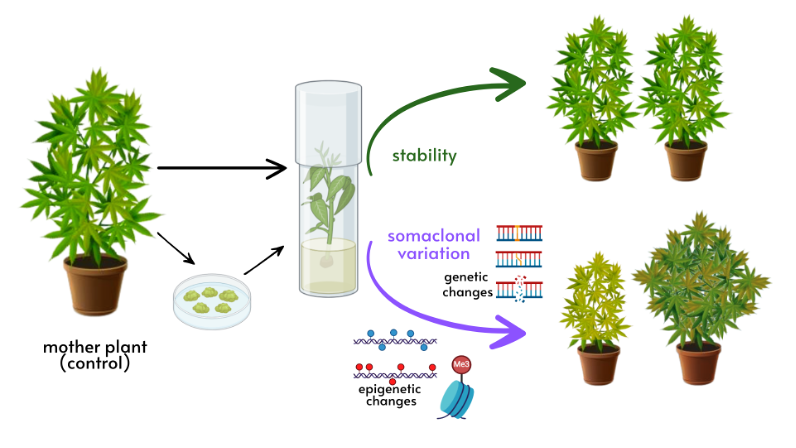
Repeated subculturing can introduce mutations. Limit the number of multiplication cycles and periodically return to original explants or cryopreserved stock to maintain genetic fidelity.
Poor Acclimatization Practices:
Sudden exposure to ambient conditions can cause plantlet shock and mortality. Gradually reduce humidity and increase light intensity over 1-2 weeks to improve survival rates.
Skipping Pathogen Testing:
Regular screening for HLVd and other pathogens is essential. Use molecular diagnostics such as RT-PCR to detect infections early and prevent spread.
Implementing Tissue Culture in Your Cultivation Facility
Integrating tissue culture into a licensed cannabis operation requires planning and investment but yields significant returns in quality and efficiency.
Key considerations include:
Facility Design:
Allocate a dedicated sterile lab space with laminar flow hoods, autoclaves, and controlled environment chambers. Ensure strict access controls to maintain cleanliness.
Training and Expertise:
Staff must be trained in aseptic techniques, media preparation, and plant physiology. Collaborate with tissue culture specialists or service providers if needed.
Media Optimization:
Customize culture media formulations for your specific cultivars. This may involve adjusting nutrient concentrations and hormone types based on empirical data.
Record Keeping:
Maintain detailed logs of explant sources, culture conditions, subculture cycles, and pathogen test results. This data supports traceability and continuous improvement.
Scaling Up:
Start with pilot batches to refine protocols before scaling to commercial volumes. Automation and robotics can enhance throughput and consistency.
By adopting tissue culture, cultivators can reduce reliance on mother plants, minimize pathogen risks, and ensure uniform, high-quality harvests that meet regulatory standards.
Further Resources on Tissue Culture for Cannabis Cultivation
For a comprehensive guide on implementing tissue culture in cannabis propagation, including detailed protocols and troubleshooting tips, visit the matching guide on zennetix.com. This resource is tailored to licensed growers seeking to optimize their genetics and production workflows.


Comments