

Tissue Culture for Commercial Cultivators
Clean Stock, Genetic Preservation, and Pathogen Recovery
How commercial cultivators, nursery operators, and breeders use tissue culture to build cleaner, more reproducible, and more defensible production programs.
What Is Cannabis Tissue Culture?
Cannabis production has scaled faster than the genetic infrastructure behind it.
Historically, the industry relied on traditional mother rooms, repeated cloning, and undocumented cultivar movement. That system worked when the market was small. At commercial scale, it has created significant problems such as pathogen pressure, phenotype drift, cultivar loss, inconsistent production, and no clear chain of custody.
Zennetix uses cannabis tissue culture to help cultivators, breeders, and nursery operators rebuild propagation from a verified, clean-stock baseline. Through tissue culture initiation, pathogen screening, HLVd remediation, Gen Zero mother stock programs, and long-term genetic preservation, Zennetix gives operators a more reliable way to protect, verify, and scale their genetics.
Utilizing tissue culture technology and scientific methodology, we move away from traditional plant propagation and toward the biological infrastructure necessary for the next phase of cannabis production.
Key terminology
Explant
A small section of plant tissue, typically a shoot tip, nodal segment, or axillary bud which is removed from a donor plant to initiate culture.
Gen Zero (G0)
The pathogen-screened, molecularly documented foundational plant from which all downstream propagation begins. Not just a clean clone, but a verified, characterized, and documented genetic baseline.
Growth Medium
A sterile, nutrient-rich gel formulation (typically MS or B5-based) that supports tissue development. Hormone ratios control whether tissue multiplies, roots, or enters holding status.
Acclimatization
The process of transitioning tissue culture plants from sterile, high-humidity in vitro conditions to ambient greenhouse or cultivation environments through gradual humidity and light adjustment.
meristematic Tissue
Actively dividing cells found at shoot tips and nodes. Preferred for explant selection because these cells are the last to be colonized by systemic pathogens and carry the lowest pathogen titer in infected plants.
gen 1
The first generation propagated from a verified GenZero source. Traceable, documented, and clean-stock by lineage rather than molecular verification.
How Tissue Culture Differs from Traditional Cloning
Traditional cannabis cloning has been the industry standard for decades. When the source material is clean, documented, and recently established, it works. Cloning is fast, inexpensive, and requires minimal equipment.
Mother plants maintained through prolonged vegetative growth become increasingly susceptible to accumulating systemic pathogens and a growing biological burden over time. Because pathogens such as Hop Latent Viroid, Fusarium, and Pythium can persist systemically or within the root environment, infected mother plants may serve as long-term reservoirs that continually transmit pathogens to successive generations of clones. Regular testing, strict sanitation, and periodic replacement of mother stock are therefore recommended best practices for commercial propagation (Punja et al. 2025).
Tissue culture interrupts this accumulation cycle. Rather than perpetuating existing plant material indefinitely, tissue culture allows producers to return to a verified clean-stock Gen Zero baseline plant and rebuild propagation from a known, pathogen-screened genetic origin. When managed correctly, micropropagation maintains cultivar identity while limiting unnecessary subculture cycles and avoiding the protocol-driven variation that extended callus-based systems can introduce.


The Five Stages of Cannabis Tissue Culture
01
Explant Selection and Preparation
Explant selection is the most consequential decision in the tissue culture process. The wrong tissue source can introduce the exact pathogens the process is designed to address.
Best practice is to select actively growing meristematic tissue at the shoot tips or nodal segments of a donor plant that has been screened and confirmed negative for target pathogens including HLVd, Fusarium, and Pythium. The explant is surface-sterilized using a staged protocol under a laminar flow hood before introduction to the growth medium. Surface sterilization reduces external contamination risk; it does not address systemic pathogens already present inside the tissue, which is why donor plant screening before explant selection is non-negotiable.
Explant Selection Best Practices
-
Select from recently emerged, actively growing shoot tips or nodal segments
-
Donor plant must be pre-screened for HLVd, Fusarium, and other target pathogens as surface sterilization does not address systemic pathogens
-
Work under a laminar flow hood with HEPA filtration throughout all transfers
-
Label and document the genetic identity and screening status of every explant source
Contamination at this stage compromises the entire batch. Protocol discipline is the quality control
02
Initiation
The sterilized explant is placed onto an initiation medium containing a semi-solid nutrient gel containing macro and micronutrients, vitamins, and plant growth regulators. The specific hormone balance determines how the explant responds: shooting, callusing, or entering holding status. Initiation protocols are cultivar-specific and typically require optimization for each new accession.
Contamination is most likely to appear during initiation. Any surviving bacteria or fungi from the sterilization process become visible within days. Contaminated vessels must be identified and removed immediately to prevent cross-contamination.
03
Multiplication (Subculture)
Once the explant has established and produced viable shoots, it enters the multiplication stage. Healthy shoots are subdivided and transferred to fresh multiplication medium at regular intervals, which is typically every four to six weeks. Each transfer multiplies the number of propagules.
This is where the scalability advantage of tissue culture becomes tangible. A single verified explant can produce hundreds of propagules within one to two multiplication cycles. For commercial nurseries, this means the ability to produce large volumes of pathogen-screened plant material from a single documented genetic source.
Subculture cycle length and the number of passages are managed carefully. Unnecessarily extended subculture or callus-based regeneration can introduce somaclonal variation from minor genetic changes arising from culture conditions. Proper protocol management limits this risk, but it is why Zennetix tracks passage number and avoids extended callus-based systems.
04
Rooting
Shoots are transferred to a rooting medium containing an auxin (typically IBA or NAA) at concentrations designed to induce root development. Rooting success rates vary by cultivar, hormone concentration, and timing. Some cultivars require multiple optimization cycles before consistent rooting is achieved. Rooting can be accomplished in vitro (in the sealed culture vessel) or ex vitro (directly into a rooting substrate under humidity control), depending on the operator's production system.
05
Acclimatization
Tissue culture plants emerge from sterile, high-humidity, low-light conditions. Acclimatization is the gradual process of conditioning plants to external humidity, temperature, and light levels over a period of one to three weeks, typically managed through stepwise humidity reduction from approximately 90 percent down to ambient levels.
This stage is frequently underestimated. Losses during acclimatization are typically the result of moving too quickly, insufficient humidity control, or substrate selection issues. A properly managed acclimatization protocol should achieve transplant success rates above 90 percent.
Why Contamination Is Destroying Your Operation
Pathogen pressure does not usually show up as one obvious disaster. It shows up as lower yield, weak rooting, inconsistent batches, failed rooms, and genetics that slowly stop performing. The margin loss is real before the cause is identified.
A mother room that appears healthy today may be carrying Hop Latent Viroid at low titer levels, expressing subclinical Fusarium stress, or harboring Pythium in its root zone. None of these are immediately catastrophic. All of them compound. Every clone from that plant carries the pathogen load forward. Every crop produced from those clones operates below the performance a verified clean-stock baseline would deliver.

Why Visual Inspection Is Not Enough
HLVd is the most significant pathogen threat in modern cannabis production precisely because it does not reliably produce visible symptoms at low titer levels. Infected plants may look healthy and perform adequately in early cutting cycles before expressing the characteristic stunting, brittle internodes, and trichome reduction associated with advanced infection.
A cultivator relying on visual inspection to screen mother plants is not running a clean-stock program. Visual inspection alone are delays the discovery of infection and in the meantime, every cutting from that plant is carrying the viroid into the next production cycle.

Why Molecular Testing Is Required
-
RT-PCR (reverse transcription polymerase chain reaction) is the current standard for HLVd detection in cannabis
-
Infected plants may pass visual inspection for multiple cutting cycles before expressing visible symptoms
-
By the time visual symptoms are widespread, the pathogen has almost certainly spread through the entire mother room
-
Low-titer infections may produce inconsistent results on some test formats. Panel assays and frequent testing increases confidence in pathogen free plants
-
No visual phenotype is a reliable indicator of HLVd-negative status; molecular testing is required for confirmed status
Hop latent viroid (HLVd) is a small, circular, single-stranded RNA molecule that belongs to the family Pospiviroidae. Unlike viruses, it contains no protein coat (capsid), no lipid envelope, and no protein-coding genes. It is simply a highly structured RNA molecule that hijacks the host plant's cellular machinery to replicate. A Minimum free energy (MFE) secondary structure of HLVd RNA (256 nt: Puchta et al. 1988) was predicted using the RNAfold tool and stylized highlighting conserved functional regions (CCR, UCR, TCR) and the rod-like architecture that drives host gene expression disruption.
.png)
Genetic Preservation, Gen Zero, and Long-Term Storage
Genetic integrity is the most undervalued asset in cannabis production. Every cultivar represents years, sometimes decades, of breeding, selection, and phenotype stabilization. That investment is stored in living plant material that is continuously at risk of pathogen accumulation, physical degradation, and operational loss.
Tissue culture changes the preservation equation. Rather than maintaining large live mother rooms that require continuous labor demands, space costs, and compounding biological risk, tissue culture allows cultivars to be preserved in vitro in a more stable state, with documented genetic identity and pathogen-screening history.

What Is Gen Zero?
Gen Zero (G0) refers to the pathogen-screened, molecularly documented foundational plant from which all downstream propagation originates. It is the verified baseline of a cultivar line.
A Gen Zero plant is not simply a clean clone. It is plant material that has been:
-
Screened and confirmed negative for target pathogens (HLVd, Fusarium, Pythium, and others as applicable to the production context)
-
Genetically characterized through molecular identification methods to document its identity and distinguish it from other accessions
-
Established in tissue culture under documented, contamination-controlled conditions
-
Assigned a permanent provenance record including genetic identity, screening results, entry date, and chain-of-custody history
HLVd-negative Gen Zero material is established only after remediation protocols and confirmatory molecular testing — not assumed from the tissue culture process alone. Tissue culture is the vehicle; molecular testing is the verification.
Long-Term Cold Storage
For cultivars with significant commercial or historical value, tissue culture material can be maintained in cold storage at reduced temperature and metabolic activity. Cold storage extends the viable preservation window, allowing genetic material to be held without continuous subculture requirements thereby reducing the passage accumulation that extended in vitro culture can introduce.
Cold storage protocols represent the most practical long-term genetic protection available to cannabis breeders and producers outside of seed banking. Unlike seed banking, cold storage preserves the exact vegetative genotype with the selected phenotype without the genetic recombination introduced by sexual reproduction.
The Strategic Value of Genetic Preservation
-
Cultivar loss is permanent. Once a genotype is gone from all living material and storage, recovery is not possible
-
Mother rooms are not disaster-proof: power failures, disease events, and facility incidents destroy genetics regularly
-
Preserved genetics with documented provenance have growing downstream value as the industry moves toward reproducible therapeutic applications
-
Chain-of-custody documentation creates the traceability infrastructure that future regulatory and research contexts will require
-
Genetic preservation is the foundation of reproducible cannabis biology, and reproducibility is what the next phase of this industry will demand
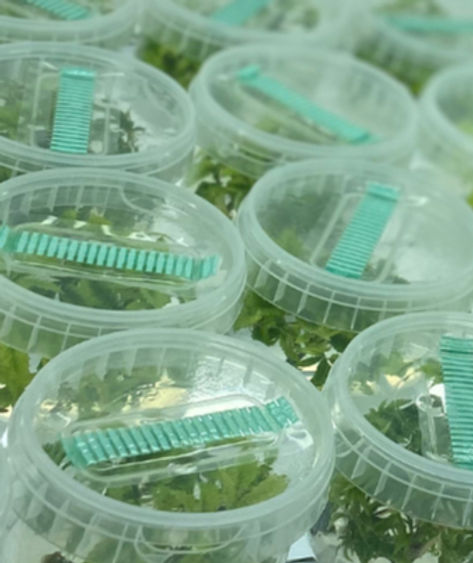
Zennetix Service Programs & Commercial Applications
Tissue culture is not a laboratory exercise. It is a production infrastructure decision that affects crop consistency, biosecurity, scalability, and long-term competitive positioning. Zennetix provides the following service programs for commercial cannabis operators.
Clean Stock Production
Zennetix produces pathogen-screened, production-ready tissue culture plantlets derived from verified Gen Zero source material. Clean stock programs are designed to align with commercial production cycles and replace or supplement live mother room operations with a more documented, more defensible input.
-
Production-ready plantlets screened for target pathogens and documented to a Gen Zero source
-
Demand-based scheduling aligned with cultivation cycle timing
-
Gen Zero mother stock replenishment for ongoing production programs
-
Documentation package: genetic identity, pathogen screening results, and provenance records with each delivery
Nursery Scale-Up and Multi-Site Operations
Licensed nurseries and multi-site producers use Zennetix tissue culture programs to standardize the genetic baseline across facilities, reduce dependence on live mother room operations, and respond to pathogen events without losing cultivar access.
A centralized tissue culture bank allows multi-site operators to pull verified Gen Zero material on a documented schedule, ensure all facilities are working from the same characterized genetic source, and eliminate the cultivar drift that accumulates when each facility maintains its own mother room independently.
HLVd Remediation and Pathogen Recovery
For cultivators managing compromised genetics, Zennetix offers a structured HLVd remediation program. The goal is to produce HLVd-negative Gen Zero material from infected source populations thereby establishing a verified clean baseline that can re-enter production on a documented foundation.
Remediation is a process, not a guarantee. Results are protocol-dependent and genotype-dependent, and all material must be confirmed negative by molecular testing before clean-stock designation.
Genetic Preservation for Breeder and Nursery Programs
Zennetix operates a genetic preservation archive for commercial breeders, nursery operators, and cultivators holding genetics with significant commercial or historical value. Preservation programs provide off-site, independently maintained tissue culture storage which protects genetics against facility events, pathogen loss, and the cumulative risk of live mother rooms.
-
Off-site in vitro preservation independent of any single cultivation facility
-
Documented provenance and molecular identity for every accession
-
Cold storage for long-term holding of high-value cultivars
-
Recovery and multiplication on request, and verified material returned to production when needed
Future Therapeutic and Research Applications
The long-term trajectory of the cannabis industry points toward reproducible chemotype production, regulatory compliance, and documented genetic traceability. Tissue culture is the biological infrastructure that supports that trajectory.
Zennetix's structured biological data in the form of genetic characterization linked to preserved source material, pathogen screening history, and provenance documentation, is designed to support future modeling, pattern identification, and the reproducibility standards that therapeutic and research applications will require.
HLVd and the Clean Stock Imperative
Hop Latent Viroid (HLVd) is the most significant biological threat to modern cannabis production. Detection has been reported in commercial operations across North America, Europe, and Australia, with some surveys reporting HLVd presence in up to 90 percent of tested facilities. Many of those operations do not have confirmed awareness of their status.
The viroid is a small, single-stranded circular RNA pathogen that is not a not a virus. Unlike viruses, viroids contain no protein coat. They are among the smallest known infectious biological agents, and their mechanism of pathogenicity in cannabis is still being studied. HLVd was first identified in cannabis crops in significant commercial quantities around 2019–2020, though it had likely been present at lower prevalence for years prior. Cannabis HLVd is closely related to but distinct from strains affecting hop production.
How HLVd Spreads
HLVd spreads through mechanical contact, meaning any process that transfers infected plant sap to healthy tissue. In a commercial cultivation environment, this includes:
-
Unsterilized cutting tools used across multiple plants
-
Hands of workers moving between plants without sanitization
-
Infected cuttings or clones introduced from external sources
-
Contaminated surfaces and shared equipment
Current evidence does not support transmission by sap-feeding insects. Seed-borne transmission can occur under some conditions. HLVd is preventable with rigorous biosecurity, but once established in a mother room, it is extremely difficult to eliminate without replacing all plant material and implementing confirmatory molecular testing.

Symptoms of HLVd Infection
HLVd presents a characteristic syndrome sometimes referred to as 'dudding':
-
Stunted growth and shortened internodes
-
Abnormal leaf morphology such as malformed or curled leaves
-
Reduced trichome density and coverage
-
Cannabinoid reductions of 20 to 40 percent have been reported in symptomatic infected populations
-
Brittle stems and reduced overall plant vigor
These symptoms may be absent or subtle at low infection titers. Visual identification alone is unreliable. Molecular testing via RT-PCR or RT-qPCR is required for confirmed diagnosis.
Can Tissue Culture Address HLVd?
Tissue culture can be used as part of an HLVd remediation program, but clean-stock status is not automatic and should not be assumed without confirmatory testing.
The most reliable approach uses meristem tip culture, where the newest, actively growing tissue is selected and may carry a lower viroid load than older plant tissue. That material is established in vitro, multiplied through controlled subculture cycles, and then tested using molecular diagnostics before being advanced to production. Success is protocol-dependent and genotype-dependent, and results vary.
At Zennetix, a plant is not treated as clean simply because it has been placed into tissue culture. Clean-stock status is earned through process control, pathogen screening, documentation, and confirmatory molecular testing. Only plants confirmed negative are designated Gen Zero and advanced to production.
HLVd Remediation Protocol
-
Step 1: Test the source population to confirm HLVd status and identify the best available donor material
-
Step 2: Select meristematic tissue from the most recently emerged shoot tips which likely have the lowest viroid titer location
-
Step 3: Initiate tissue culture under strict sterile conditions using the laminar flow and documented protocol
-
Step 4: Multiply culture material through controlled subculture cycles
-
Step 5: Test regenerated plants using RT-PCR or RT-qPCR before any production use
-
Step 6: Only plants confirmed negative are designated Gen Zero and advance to production
-
Step 7: Maintain strict tool and surface sterilization protocols downstream to prevent reintroduction
Tissue Culture Cannot...
-
Surface sterilization does not address systemic pathogens already present inside the tissue. Meristem selection and molecular testing are required for HLVd
-
Tissue culture does not guarantee HLVd elimination. Success is protocol-dependent and genotype-dependent; all material must be confirmed by molecular testing
-
Extended subculture cycles or callus-based regeneration can introduce somaclonal variation. Passage number is tracked and managed at Zennetix
-
Cold storage still requires monitoring and protocol management and reduces maintenance compared to live mother rooms but does not eliminate it
FAQs
Is tissue culture cannabis genetically identical to the original plant?
When proper explant selection and culture protocols are followed, micropropagation maintains the cultivar identity of the source plant. The process does not modify the plant's DNA. However, long subculture cycles and callus-based regeneration systems can introduce somaclonal variation — minor genetic changes arising from the culture environment. At Zennetix, passage number is tracked and protocols are managed to limit this risk. 'Genetically identical' is accurate when protocols are managed correctly; it is not an automatic outcome of being in tissue culture.
How long does tissue culture take from explant to transplant-ready plant?
General timelines range from 8 to 16 weeks from explant to acclimatization-complete, transplant-ready plant — depending on the cultivar, the stages required, and whether pathogen testing is integrated. Multiplication cycles run approximately four to six weeks each. Rooting and acclimatization add additional time. Multi-cycle confirmatory testing extends the timeline but is non-negotiable for a verified clean-stock program.
Do tissue culture plants perform differently than conventional clones?
Tissue culture plants require an acclimatization period and may display different early growth morphology compared to conventionally produced clones. Once established, properly produced tissue culture plants from a clean, verified source should match or exceed the performance of conventional clones from clean source material. Performance differences after acclimatization are most often attributable to acclimatization management, substrate selection, or transitional stress — not the tissue culture process itself.
Can any cannabis cultivar be put into tissue culture?
Most cannabis cultivars respond to tissue culture protocols, but optimization is cultivar-specific. Growth regulator ratios, explant tissue source, and rooting protocols typically require adjustment on a cultivar-by-cultivar basis. Some cultivars present rooting or initiation challenges that require additional protocol development. This is a normal part of the process, not an indication that tissue culture is unsuitable for a given cultivar.
What is the difference between tissue culture storage and cryopreservation?
Tissue culture storage maintains living plant material in an active or reduced-metabolic state at standard refrigeration temperatures — typically used for active banking and production readiness over a period of months to a few years. Cryopreservation stores plant material at ultra-low temperatures (typically in liquid nitrogen at -196°C) in suspended biological stasis for very long-term archival. Both methods serve different purposes: tissue culture for active programs and production readiness; cryopreservation for indefinite archival of irreplaceable accessions.
How does Zennetix verify genetic identity?
Zennetix applies molecular characterization methods to document the genetic identity of material entering the tissue culture program. This creates a traceable provenance record for each cultivar — documenting genetic origin, pathogen testing results, passage history, and chain of custody from Gen Zero through all downstream propagation stages. This documentation infrastructure supports the reproducibility and traceability standards that future research and regulatory contexts will require.
Is the Mother Vault a separate program?
Zennetix maintains a genetic preservation archive — a private collection of genetically characterized, pathogen-screened, tissue culture-preserved cannabis accessions held in documented cold storage. Preservation programs for breeders and commercial operators provide off-site storage independent of any single cultivation facility. Contact Zennetix directly for information about breeder and commercial preservation programs.
© Zennetix | Cannabis Tissue Culture for Commercial Cultivators | Clean Stock, Genetic Preservation, and Pathogen Recovery
Let’s Work Together
Zennetix helps commercial cultivators, nursery operators, and breeders protect their most valuable asset: their genetics.
Whether you need to clean up compromised plant material, establish verified Gen Zero mother stock, preserve elite cultivars off-site, or scale production from a documented clean-stock source — Zennetix provides the tissue culture infrastructure for long-term, reproducible cannabis production.
Clean-stock infrastructure. Verified Gen Zero baseline. Pathogen-screened plant material. Molecular documentation. Genetic provenance and chain of custody.

